Welcome!

We started this blog in 2010 after a New Years' Resolution to read 60 books between the two of us. (40 for C, 20 for D.) After reaching our goal, we decided to keep going in 2011. This year, C has pledged to read 30 books, and D will read 12. By no means are we professional reviewers; we're not even professional bloggers. We're just two people who love to read and decided to share our thoughts and offer our limited insights. We hope you enjoy!

Sunday, July 3, 2011

Book #23: The Scars

This is one of my favorite books of the year so far, although it's not at all like I thought it would be based on the description I read.


The Scars by William Tennant is free on Kindle and also a free audio book from Podiobooker. The Amazon page for the book gives the following description: 


"Peter has lost the love of his life, Mags is a young girl broken by abuse, Bernard has a glint in his eye and a slur in his soul and Emma is powered by a hidden past. In 'The Scars' we find life, loss, beauty, darkness, desire and violence.In 'The Scars' we find the saddest of loves."

Nothing in that description is false, but it does leave a lot out. In The Scars, Peter is a fresh-out-of-college literature teacher in England who has recently lost his brand new wife. Bernard and Emma are his fellow teachers who become very close to Peter, but refuse to be around each other due to a mysterious past encounter between the two of them. Peter notices that one of his students seems deeply troubled. He eventually learns that the student, Mags, is being abused by her stepfather. Peter fights to get her the justice she deserves while simultaneously  trying to put his life back together after the devastating death of his wife. 

So... There are many twists and turns in this book that I'd love to discuss, but I want everyone to read it so badly that I refuse to spoil it. And can I just say, please do NOT read the reviews by the readers on Amazon before you read this book. Not because I think the reviews are unfair, but because they are literally riddled with spoilers. Most of them ruin the entire climax of the book within the first few sentences. So, please, don't read those.

There are some things in this book that are hard to swallow, but, I'm here to tell you, are reality. Regardless, Tennant is a gifted author with a talent for character development. There's a deep connection between the reader and the characters, even the more secondary characters. There is a scene in towards the end of the book where Peter is talking to someone in an online chatroom, and for some reason I found myself thinking that it couldn't possibly be Peter talking -- I knew his character too well to believe he was saying the things he was saying. It was very, very subtle, and it wasn't meant to be obvious to the reader at all, but soon you find out that it was, indeed, someone impersonating Peter online. That's just a small example of how well Tennant describes Peter's personality.

This book sort of has everything -- love, scandal, abuse, justice, death, action, mystery... You name it, it's in here. It's a wonderful book that I think some people might skip over due to the lackluster description, but I hope if you get a chance, you'll check out the Kindle book or the audio book. It is highly recommended.


Read from June 25 to June 28, 2011

5/5 Stars

--C

Sunday, June 26, 2011

Book #22: Quid Pro Quo & Zachary Zombie and the Lost Boy

I like to review the short stories that I read, particularly if they're good, but as you know, I don't like to count them as books. As always, I read two short stories/small books to count them as one, as is the case with this review.


First up is Quid Pro Quo, a short story by Dan Dillard. In this story, there are two families struggling with illness. Louis is a child who suddenly develops life-threatening flu-like symptoms, and Laura is a middle-aged married woman who has been riddled with cancer. The families do not know each other, but they share a common determination to be healthy. Hearsay leads both families to a mysterious man named Steven, who is said to be a healer. Louis and Laura are both "healed" by Steven, but they soon learn that healing comes at a high cost.


This was a jarring, strange little tale that will really make you think. Louis and Laura both thought that the ability to live was all they wanted or needed. As it turns out, quality of life becomes more important than how long they survive. Steven says there is no up without down, no back without front, no dark without light, and so on. There's a cost for everything, and it's interesting to see what Louis and Laura give up for their health, and whether cheating fate was worth it in the long run. This definitely isn't a feel-good story, so don't pick up for a quaint sunny afternoon read. That being said, I really enjoyed it, even though it was kind of disturbing. Those kinds of stories are nice every once in a while, especially when it's just a short story. You can get it for free on Kindle here


4/5 Stars


Read on June 23, 2011


Next is Zachary Zombie and the Lost Boy: A Story for Demented Children. This is a short story by John H. Carroll, which really is intended for children -- demented or not, I think. I like zombies, and I admittedly have had a bit of Halloween fever lately (I wish it came more than once a year...), so I thought I would use this as the second part of my short story review. I am sad to say I was disappointed.


The story is about a kid named Tobais who gets lost in the woods. He comes across Zachary, a zombie who has actually retained his soul thanks to a witch's spell... So he's kind of part-zombie, part-human. Tobais asks Zachary to help him find his way home, apparently unscathed by the fact that Zachary is a zombie. So, they set out to make it back to the village. Meanwhile, for about a page or so, there's a snobby girl named Anise who longs to be rescued her from her perfectly comfortable lifestyle. Not really sure why that's important, but it's there. 


There's really not much going on in this story. It's got some silly, zany descriptions of zombies and their creepy friends, and it's kind of funny in a children's book sort of way. Still, I don't think there was a point. Even kids' books need to have a point. The last couple of paragraphs (in which a prince is introduced), while they do tie in to a previous scene in the story, completely do not belong at all. It sounds like the beginning of an entirely different story.


Maybe I don't read enough children's books and was expecting too much from this. It just wasn't very well-crafted. My kids in the summer program I teach wrote children's stories a couple of weeks ago, and even they understood there needed to be a story arc and a finite ending. Oh, well. This was also free on Kindle, and you can see more about it here.


1/5 stars


Read from June 24, 2001 to June 25, 2011


--C


Book #21: The White Queen

As much as I enjoy historical fiction, it may come as a surprise that I've never read anything by Philippa Gregory. She's pretty much the queen of historical fiction, best known for The Other Boleyn Girl. After reading this, I think it might be safe to say it's the start of a beautiful relationship between Philippa and I.


The White Queen is the first in a series of books about the Plantagenet royals in England. At the center of this book is the War of the Roses -- the war between the Yorks and the Lancasters for the rightful heir to the throne. The Lancasters were symbolized by a red rose, the Yorks by a white rose -- hence the title The White Queen. (The next book in this series is The Red Queen, written about Lancastrian heiress Margaret Beaufort).


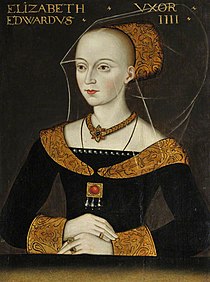
Elizabeth Woodville is the narrator of The White Queen, and she is a very intriguing character indeed. Elizabeth was originally from the House of Lancaster, with both her father and husband fighting in the War of the Roses against the Yorks, who had already placed Edward IV on the throne. Her husband died in battle, and Elizabeth was widowed with two young sons and a difficult set of in-laws. As historical legend has it, Elizabeth stood on the side of the road waiting for Edward IV to pass with his army so that she could ask him to settle a financial dispute between her family and her late husband's family. It is said that Edward was taken by her beauty immediately, and the two were soon married in secret. Yes, a Lancastrian widow and the York King of England. You heard me right. That is history, folks. You can't make up stories any better than what has actually occurred in this strange world of ours.


So, Philippa Gregory takes us from Elizabeth's time as a frustrated widow to her days as the most beautiful queen England ever saw, and then through several more battles for the throne. With the War of the Roses (commonly referred to as "The Cousin's War") as the backdrop, Elizabeth's story makes for a wonderful novel of conspiracy, scandal, revenge, and loss. The fact that the war really is a tangle of cousins, friends, and former allies means that you never really know what side anyone is on. 


There's something wonderfully authentic about Philippa Gregory's writing. You lose all sense of the novel being fiction. It often feels like you're just reading Elizabeth's diaries. I guess if you are able to build a name for yourself as one of the best historical fiction authors of your time, you know how to do research. I was impressed that just about every major aspect of the novel is based on historical evidence. Of course she fills in some gaps from time to time and has to choose between a handful of historical theories about what may have happened, but everything from Elizabeth's stunning beauty to her family's reverence of Melusina the water goddess are based on evidence. There's a pretty impressive bibliography in the back of the book that shows just how hard she worked to ensure the accuracy of her work. 


One thing I feel like I need to mention is how striking the lust for an honorable title is to these people. Elizabeth was willing to stop at nothing to make sure her son would claim the throne after Edward died. If you know your history, you know that after Edward died, his brothers tried to keep his son from the throne by claiming he was a bastard, and that Elizabeth was no more than his mistress, not his wife. It's one thing to want your family to get what is deservedly theirs, but it gets to the point where her entire family is suffering and at times facing death just for the chance that her son might get to be king. It's not even about right and wrong after a certain point -- it's just pride. It's hard to explain without laying out the entire plot of the book, but it's just such a warped sense of snobbery. I don't get it. Again, that's just the way it was, so it's not a problem with the book, it's a problem with history. It's always been confusing to me, but it is very well-displayed in this novel.


Here's a bit of a warning, though. You may or may not have noticed that the English, particularly the royal English, aren't very original when it comes to choosing names. You have to stay on your toes when you're reading this, because there are several Edwards, a few Elizabeths, some Georges, and more Richards than I care to think about. For God's sake, Elizabeth herself had two sons named Richard (one with her first husband, one with Edward).  Richard was also her first husband's name, Edward's brother's name, and Edward's brother's son's name, so that's five Richards already. Throw in the Richards you come across in the names of soldiers and distant cousins, and you've basically got yourself a headache. She does a good job clarifying which one she's talking about, but still... don't read it when you're really sleepy.


Anyway, this was a very pleasant first experience with Philippa Gregory, and I am looking forward to reading her other novels. 


4/5 Stars


Read from June 12, 2011 to June 24, 2011


--C


Tuesday, June 14, 2011

Book #20: Harry Potter and the Goblet of Fire

This is my favorite of the Harry Potter books so far. That's apparently a rather controversial statement, but I don't particularly care.

In the fourth book of J.K. Rowling's massively popular series, Harry, Ron, and Hermoine attend the Quidditch World Cup. Quidditch is the most popular sport in the wizard world, and the World Cup brings together wizards from all over the world... Turns out to be the perfect place for the evil Lord Voldemort's supporters (known as "Death Eaters") to rally together and cause some trouble. The Death Eaters' stunt sends everyone into a frenzy. Meanwhile, as the school year begins at Hogwarts, Harry learns that students from the Belgian and French schools of magic (Durmstrang and Beauxbaton, respectively) will be visitors at Hogwarts to participate in the Triwizard Tournament -- a series of tasks to determine the strongest wizard or witch. Harry is too young to participate, but that doesn't stop a hidden Death Eater from trying to bring Harry straight to Lord Voldemort, who is still seeking revenge.

The Triwizard Tournament is the main reason that I enjoyed this book so much. The selection of school "champions," the clues they are given for each task, the strategies to consider for facing each task... Beautiful. I have to say, it reminded me a little of The Hunger Games...  Of course the entire Harry Potter series was written before The Hunger Games... and the Triwizard Tournament is much less violent and cold-hearted. Still, there were some similar elements. Just enough to make me smile.

Another dimension of the Hogwarts' students lives was added in Goblet of Fire, and that is romance. Harry, Ron, and Hermoine are 14 in this book, and hormones are kicking in. All three of them are struggling with crushes, and things get complicated when Hogwarts hosts a ball to bring together the students from the competing schools. There's plenty of drama about all of that, but it wasn't overkill. (And by that, I mean, it wasn't the kind of drama you might read in, say, Twilight.) It didn't take away from the story, and I appreciate that.

You find out some interesting things about some of the recurring characters in this book, like Snape and the Malfoy family, among others. I'm really looking forward to seeing how things shape up as far as that goes. I'm  kind of sad that I'm over halfway done with the series. That's why I'm reading them about a month apart... Spreading it out as much as I can.

5/5 Stars

Read from May 29, 2011 to June 11, 2011

--C

Tuesday, May 31, 2011

Book #19: American Gods


Our book club's choice for June was American Gods by Neil Gaiman, a very well-known science fiction/fantasty author. His books Coraline and Stardust have both been turned into successful movies, and he recently wrote an episode of the hugely popular British television show Doctor Who. Even though his material isn't always exactly up my alley, I still have a lot of respect for his work. I think he's pretty brilliant, so I was very excited to read American Gods

When we meet the main character, Shadow, he is in prison counting the days until he can go home to his beloved wife, Laura. Shadow learns that he will be getting out of prison a few days early... due to his wife being killed in a car accident. On his way home for the funeral, Shadow meets a mysterious man who calls himself Wednesday who seems to show up everywhere Shadow goes. Wednesday asks Shadow to work for him as a personal assistant of sorts, and, with essentially no other option for moving on with his life, Shadow reluctantly agrees. Wednesday turns out to be the powerful god, Odin, who is on a mission to gather his fellow gods from various regions and mythologies in order to face the "newer" gods of the modern lifestyle. What follows is a strange journey through America to enlist the aid of these gods in the battle against the new gods.

Overall, I really enjoyed the book, but I have to say that it lost me a little bit somewhere after the mid-way point. I felt like there was a lot of stuff going on for no reason. Looking back, I'm not sure what the point of half of the book was, as it seems like very little that happened along the way even made a difference. That's not to say I didn't enjoy reading about Shadow's journey around America and his interaction with some of the gods, because it was entertaining and well written, but... It was kind of pointless. I don't want to spoil the ending for anyone, so let's just say that I thought the ending was pretty anti-climactic. It seems like the entire book moved you toward a specific event that didn't technically happen.  My biggest beef with the book could be boiled down to the disconnection of it all.

In a similar vein, there were "Coming to America" vignettes throughout the book that detailed the older gods' (who obviously began as gods in other regions' mythologies) journeys to America. I appreciated what Gaiman was doing by peppering these throughout the novel, but they just didn't seem to fit. Almost none of the gods you read about in these short tales ever show up again in the book. I get that they were there as background information, but it almost seemed like filler... Which wasn't really needed in a book that weighs in at almost 600 pages.

That being said, I really didn't dislike the story itself. I thought the characters were well-developed and likable, even with their flaws. If you've been reading this blog for a while, you know that likable characters are a huge thing for me. I liked Shadow, and even Wednesday, although he was pretty crooked. In the book, Shadow spends some time living in an apartment in the small town of Lakeside in order to be "hidden" from some shady characters who are on Shadow and Wednesday's tails. I LOVED Lakeside and everyone in it. It was quirky and weird and frozen for most of the year, and the people there were hilarious. What's not to love about a town with a tradition of townspeople entering a contest to guess the day and time that a broken-down car will break the ice on the frozen lake? The town has its dark side, though, with missing teenagers and strange stories from the past, which just adds to the intrigue. I was sad to see Shadow leave Lakeside. 

So... I don't know. I liked it, some parts more than others, but I didn't love it. I feel sort of empty about it. After a killer first half, it didn't deliver for me, and I was really hoping it would. It is far beyond my literary and intellectual boundaries to legitimately criticize him. Maybe his whole vision for this book just wasn't for me.

3/5 Stars

Read from May 8, 2011 to May 28, 2011.

--C

Friday, May 13, 2011

Book #18: The Shepherd

This is probably my favorite book I've read all year. It scared the crap out of me, blew my mind, and then I couldn't stop thinking about it. Still can't, really. (But not in the same way I couldn't stop thinking about Of Mice and Men... That's a whole different thing. I'm still angry at that book.)

Let me first point out that this is a classic case of why you should NOT judge a book by its cover. That is some ugly stuff. Luckily I got it on Kindle, so I didn't have to look at that every time I picked it up. (By the way, it's not free anymore, but it is a mere $2.39. Well worth it.)

I am going to do a completely terrible job of explaining what this book is about, because just when you think you know what's going on... You're wrong. I don't think I can actually tell you what's going on without ruining the book, and you legitimately must read it, so I'm not going to spoil it for you. I'll just give you some basics:

Francis Ackerman is the worst kind of serial killer -- the kind with mood swings, the kind that gives you false hope for survival, the kind that forces you to play twisted death games, the kind that wants to savor every second of your agony. Want an example? How about forcing a mother to play Russian Roulette with her two young children? Or challenging his victim to a game of Hide and Seek -- if he finds you, you die; if he doesn't, congratulations. Ackerman travels around wherever his hunger takes him, and he winds up in a small, sleepy Texas town. Marcus Williams also finds himself in this town, where he's trying to put his life back together on an inherited farm after his career as a New York City detective falls apart. Marcus stumbles across one of Ackerman's victims, and he naturally goes to the police. The local sheriff brings him in for questioning, and Marcus quickly realizes that the sheriff seems to be ignoring major evidence in the case. Soon enough, Marcus learns about some serious corruption in the local police department. Meanwhile, Ackerman has been watching Marcus, and he believes that they are opposite sides of the same coin. Ackerman feels drawn to Marcus, and he believes Marcus can help him prove that being a serial killer has been his destiny all along.

That's the best I can do... But there's so much going on that I couldn't even begin to scratch the surface. This is probably the only book I've ever read that literally made me shout, "WHAT?!" every couple of chapters. You never see some of this stuff coming. The ending is one of the most insane twists I've ever seen a book take. I kept wondering about a few loose ends and small plot holes that didn't make sense... Then the end happened, and everything made sense.

I absolutely recommend putting this on your must-read list.

5/5 Stars

Read from May 1, 2011 to May 7, 2011

--C

Sunday, May 1, 2011

Book #17: 13 Little Blue Enevelopes

This is one of those books, a lot like House of Dark Shadows, that I decided to read at random, totally loved, and then found out there were sequels and got really mad that I would have to find/buy them. 

Maureen Johnson's 13 Little Blue Envelopes is a young adult novel about 17-year-old Ginny Blackstone, who is shy, unassuming, and has pretty much never done anything exciting. Her Aunt Peg, on the other hand, was a flaky, nomadic adventurer who often disappeared overseas for months at a time without her family knowing where she was. Shortly before the novel opens, Ginny's family receives word that Peg has unexpectedly died. A few weeks later, Ginny gets a package from her deceased aunt containing thirteen blue envelopes, to be opened in order. They contain directions for Ginny to take a journey through her Aunt Peg's footsteps in Europe. If she follows the plan, Ginny will be taken to places that were special to Peg, meet Peg's European friends, and find out more about herself on the way. The "rules" set out in the first letter are as follows:
  • Rule #1: You may bring only what fits in your backpack. Don't try to fake it with a purse or a carry-on.
  • Rule #2: You may not bring guidebooks, phrase books, or any kind of foreign language aid. And no journals.
  • Rule #3: You cannot bring extra money or credit/debit cards, traveler's checks, etc. I'll take care of all that.
  • Rule #4: No electronic crutches. This means no laptop, no cell phone, no music, and no camera. You can't call home or communicate with people in the U.S. by Internet or telephone. Postcards and letters are acceptable and encouraged.

So, there you go. A 17-year-old girl, traveling alone in Europe with no guidebooks, no money, and no way to contact people back home -- all while following crazy directions from her dead aunt. That's what's going on in 13 Little Blue Envelopes.

I have to say, I really loved this story. It's an interesting premise, and Johnson is a fantastic descriptor. You can tell she has spent time in Europe, because the way she writes about Ginny's trip makes you feel like you're right along with her. The fact that Ginny herself doesn't know what the next step of her journey will be is what keeps you turning the pages. You find yourself wondering what exotic place Peg will send her next, and what strange characters she'll meet on the way.

This is written for the young adult/teenage crowd, so it's a simple read. I didn't really find the story itself all that juvenile. It has all the elements that a young adult novel should -- adventure, uncertainty, angst, a little bit of a romance... And while we're on the subject of that last one, the guy that Ginny falls head over heels for is really annoying. I don't get the attraction, so I could for sure do without that part of the book.

There's a soon-to-be released sequel called The Last Little Blue Envelope. I won't spoil anything about the first book, but let me just say that there doesn't have to be a sequel. The title of the second book might lead you to believe that 13 Little Blue Envelopes is left wide open with no resolution, but that's not the case. It could stand alone and still be great. I would recommend this as a short, easy read when you're in the mood for something light and enjoyable.

3.5/5 stars

Read from April 24, 2001 to April 30, 2011

--C