Welcome!

We started this blog in 2010 after a New Years' Resolution to read 60 books between the two of us. (40 for C, 20 for D.) After reaching our goal, we decided to keep going in 2011. This year, C has pledged to read 30 books, and D will read 12. By no means are we professional reviewers; we're not even professional bloggers. We're just two people who love to read and decided to share our thoughts and offer our limited insights. We hope you enjoy!

Tuesday, August 16, 2011

Book #26: The Help

When I saw the giant, wall-sized poster for the movie called The Help in my local theatre, I had no idea it was based on a book. I just knew that Emma Stone was on the poster and she was BLONDE, so I thought, "Finally! Something that might make people stop telling me I look like Emma Stone!" I soon heard that it was based on a popular book, but I never thought much more about it.


Fast forward a few weeks, and several friends of mine were talking about the book on various social networking sites, almost all of them using the exact phrase, "can't put it down." Well, that always makes me curious. Multiple people whose opinions I trust raving about the same book. OK. I had just finished A Game of Thrones and had planned on jumping right into the next book in the series, but I was so HEARTBROKEN after the end of that book that I needed a break. I took my happy tail to Amazon, downloaded The Help for my Kindle, and started reading 5 minutes later. Thirty-six hours after that, I had finished the book. Loved it.


The Help is University of Alabama graduate (booooo, War Eagle!) Kathryn Stockett's novel about the relationship between white families and their "help" in the 1960s. The story's narration is done by three people (except one chapter, which is told from an omniscient point of view). The first two narrators, Aibileen and Minny, are black maids for white families in Jackson, Mississippi. The third narrator is Eugenia "Skeeter" Phelan, who the young, white daughter of an affluent Jackson family who has recently graduated from college and wants to pursue a journalism career. All of Skeeter's friends quit college after they found husbands, and they are now living happily ever after, hiring maids to do their chores and raise their children. Although Skeeter has chosen a different path in life, she still attends weekly luncheons and club meetings with her friends. This is where Skeeter starts to notice just how her friends are treating their "help." When her insufferably vapid friend Hilly begins a community-wide movement to install separate bathrooms for maids to avoid "disease," Skeeter knows she has to do something to open people's eyes to the discrimination and injustices in the South.


I am, as you know, a sucker for a good Southern story, and even more of a sucker for a good historically-based novel. The tumultuous 1960s is a great setting for just about any story, and Stockett uses iconic historical events throughout her story to move the plot along. There are things in this book that will make you sick and ashamed and angry and just about every other emotion under the sun. 


As a history teacher, I often feel like there are monumental events in our history that we hear about so much that we take them for granted. "Yeah, yeah, Rosa Parks wouldn't give up her seat on the bus. We know, we've learned about it every year since 4th grade." It almost loses its importance because it's just rote fact at this point. (Not saying I feel that way, but I know plenty of my students do.)  There were so many unbelievably brave things that people did to change the way things were, and many of us don't even stop to think about how much of a risk they took just to stand up for what they knew was right. This book pretty much dares you to forget about how much of a sacrifice so many people made in the 60s for racial equality. You see what happens to people who stand up for what's right in this book, and it's heartbreaking. You see how powerful the desire is to fit in and not "associate" with blacks other than to hire the "poor things" as your help, lest you be shunned by your socialite friends. 

This book will definitely give you plenty to think about, and I fully agree with the "couldn't put it down" sentiment. Worth your time, for sure.


5/5 stars


Read from August 5, 2011 to August 7, 2011


--C

Book #25: A Game of Thrones


Where. Do I. Begin?


It has been a long while since a book has devoured every fiber of my being like this book did... Every now and then, you just have that book. The last time I read a book that was that book, it was Pillars of the Earth, back in 2007. That's not to say there haven't been tons of books I loved since then, because there have been -- The Hunger Games and Millennium trilogies, to name a few. Still, nothing has been quite so captivating as the first book in George R. R. Martin's A Song of Ice and Fire series. 


Let me begin by saying that it took me a very, very long time to read this, and that includes listening to the audio book on and off.  The copy I have is 800-ish pages, so it's a monster of a book, but I've read longer books in shorter amounts of time. For me, the issue wasn't that the book didn't have me hooked -- it did. It's just not a book I want to pick up for a few pages at a time, or a book I want to read while I'm, say, sitting on a school bus full of loud elementary school children. (Tried it -- major comprehension fail.) You get sucked in to the world that Martin builds, and you don't want to just stop in for a minute and then leave. You want to commit an hour or so at a time to reading, and I think that's something most would have trouble doing on a daily basis.


I will also say that for the first several chapters, I was completely confused. It's hard to read at first, and there are a lot of characters and places and families/houses to get to know. When I was about 50 pages in to the book, I was discussing it with a friend at work, who told me that there's an appendix in the back that lists the members of each house, including servants. MAJORLY helpful. I would actually recommend reading that first, and then starting the book, but even if you don't, it's great to have that to flip back to when you get confused.


OK, so, what's it about, right? Well, I'm avoiding that question because there's a lot going on, and I'm not really sure where to start. The major focus is the Stark family, head by Eddard Stark, the Lord of Winterfell. Winterfell is in the frigid northern region of a kingdom ruled by King Robert Baratheon, who is a longtime friend of Eddard's. King Robert seized the throne from the Targaryen family, whose young heirs still live and want to restore their family's reign. King Robert married a lady from the Lannister family, who are known for their wealth  and their shrewd attitudes. (Confused yet?)  You obviously have the issue of the Targaryens seeking to win back their power, but at the same time, the Hand (or advisor) to the King has mysteriously and suddenly died. Many in the kingdom suspect foul play, and they begin searching for an answer. Add to that some creepy snow zombies running around outside the Wall that protects the kingdom, and you have yourself one action-packed book.


I really cannot say enough good things about this book. Everything about it is amazing. The Lannisters are deliciously evil, and the Starks admirably noble. There are characters that you will absolutely fall in love with and characters that make you rage. I always think a book is good if I can't stop thinking about how much I hate one of the characters. (Characters I'm supposed to hate, that is -- not like Bella Swan in Twilight. I'm supposed to like her, but I hate her. Not the same.) I laughed out loud several times while reading this, I was totally thrown for a loop more than once, and I will admit that I cried. Only once, but I did. I was totally heartbroken, and it was awesome.


Here are two of my favorite quotes from the book:


"A mind needs a book as a sword needs a whetstone, if it is to keep its edge." -- Tyrion Lannister


"When you play the game of thrones, you win or you die. There is no middle ground." -- Cersei  Lannister


READ IT, I SAID.


5/5 stars


Read from June 30, 2011 to August 4, 2011


--C

Friday, July 29, 2011

Book #24: Songs for a Teenage Nomad

Sorry for the pause between updates. Not sure why it took me a month to sit down and write this review, but the good news is that I enjoyed Kim Culbertson's Songs for a Teenage Nomad so much that I have no trouble remembering what I want to say about it.


The narrator is 15-year-old Calle, a smart, reasonable teenager with a flaky, unstable mother. Her mother has had short-term relationship after short-term relationship for Calle's entire life, each new man coming with a new city and a new lifestyle. The only man that Calle's mom doesn't seem interested in discussing is Calle's dad, about whom Calle knows absolutely nothing. Songs for a Teenage Nomad opens with the family starting over yet again in Andreas Bay, California.


For the first time in all of their travels, Calle finds a group where she fits. She makes friends quickly, and even though she mostly hangs out with the "theatre kids," she develops a relationship with a popular athlete at school. Naturally, her mom's newest relationship starts to turn sour, and the threat of moving looms yet again. Then a unexpected visitor shows up in Andreas Bay, and Calle's entire world is turned upside down.


Why the title Songs for a Teenage Nomad? Calle loves music -- pretty good music, too. Music is the only thing that she knows will never change, so she keeps a journal of songs and the memories that each song holds. Each chapter of the book begins with a handful of lyrics and a short blurb of Calle's memory of the song. For example, this is the song she and her mother listened to after Boyfriend #7 left. This is the song that was playing when Calle found out they were moving to Nevada. It was a brilliant way for Culbertson to give more background information about exactly how unstable Calle's life had been without boring us with it all in to the first chapter or so of the book.


I really, really enjoyed this book, probably because I liked the connection between the story and popular music. I think particular songs remind us all of a certain time or memory from our lives. I love that Calle keeps a record of it. (The back of the book includes instructions and suggestions for keeping your own journal like Calle's. ) As for the plot, I saw some of it coming just by reading the book description, but don't let that fool you -- there is a lot you will not see coming. :)


There were some very, very eerie similarities between a few random things in the book and my own teenage years. My life was nothing like Calle's, of course, but I'm talking about tiny little circumstances that freaked me out. The first play the drama club does at Calle's new school is Christopher Durang's The Actor's Nightmare. The first play I did in high school as a freshman was The Actor's Nightmare. Calle mentions that she and her friends love the scene in the movie Almost Famous where the characters sing Elton John's "Tiny Dancer." My friends and I reenacted that scene in drama class one day... There were many, MANY other examples, some even creepier (bu would require a lot of explanation). I got to the point where I was seriously freaked out a couple of times, but I guess that just means I was meant to read this book.


Definitely a great read, and it's young adult, so recommend it to all the 'tweens and teens you know. Way better than Twilight.


Read from June 28, 2011 to June 30, 2011


5/5 Stars


--C


PS -- I've been reading George R. R. Martin's A Game of Thrones for a MONTH. A MONTH!!!!! I'm about 3/4ths done, so hopefully I'll write a review soon. Don't lose faith in me!

Sunday, July 3, 2011

Book #23: The Scars

This is one of my favorite books of the year so far, although it's not at all like I thought it would be based on the description I read.


The Scars by William Tennant is free on Kindle and also a free audio book from Podiobooker. The Amazon page for the book gives the following description: 


"Peter has lost the love of his life, Mags is a young girl broken by abuse, Bernard has a glint in his eye and a slur in his soul and Emma is powered by a hidden past. In 'The Scars' we find life, loss, beauty, darkness, desire and violence.In 'The Scars' we find the saddest of loves."

Nothing in that description is false, but it does leave a lot out. In The Scars, Peter is a fresh-out-of-college literature teacher in England who has recently lost his brand new wife. Bernard and Emma are his fellow teachers who become very close to Peter, but refuse to be around each other due to a mysterious past encounter between the two of them. Peter notices that one of his students seems deeply troubled. He eventually learns that the student, Mags, is being abused by her stepfather. Peter fights to get her the justice she deserves while simultaneously  trying to put his life back together after the devastating death of his wife. 

So... There are many twists and turns in this book that I'd love to discuss, but I want everyone to read it so badly that I refuse to spoil it. And can I just say, please do NOT read the reviews by the readers on Amazon before you read this book. Not because I think the reviews are unfair, but because they are literally riddled with spoilers. Most of them ruin the entire climax of the book within the first few sentences. So, please, don't read those.

There are some things in this book that are hard to swallow, but, I'm here to tell you, are reality. Regardless, Tennant is a gifted author with a talent for character development. There's a deep connection between the reader and the characters, even the more secondary characters. There is a scene in towards the end of the book where Peter is talking to someone in an online chatroom, and for some reason I found myself thinking that it couldn't possibly be Peter talking -- I knew his character too well to believe he was saying the things he was saying. It was very, very subtle, and it wasn't meant to be obvious to the reader at all, but soon you find out that it was, indeed, someone impersonating Peter online. That's just a small example of how well Tennant describes Peter's personality.

This book sort of has everything -- love, scandal, abuse, justice, death, action, mystery... You name it, it's in here. It's a wonderful book that I think some people might skip over due to the lackluster description, but I hope if you get a chance, you'll check out the Kindle book or the audio book. It is highly recommended.


Read from June 25 to June 28, 2011

5/5 Stars

--C

Sunday, June 26, 2011

Book #22: Quid Pro Quo & Zachary Zombie and the Lost Boy

I like to review the short stories that I read, particularly if they're good, but as you know, I don't like to count them as books. As always, I read two short stories/small books to count them as one, as is the case with this review.


First up is Quid Pro Quo, a short story by Dan Dillard. In this story, there are two families struggling with illness. Louis is a child who suddenly develops life-threatening flu-like symptoms, and Laura is a middle-aged married woman who has been riddled with cancer. The families do not know each other, but they share a common determination to be healthy. Hearsay leads both families to a mysterious man named Steven, who is said to be a healer. Louis and Laura are both "healed" by Steven, but they soon learn that healing comes at a high cost.


This was a jarring, strange little tale that will really make you think. Louis and Laura both thought that the ability to live was all they wanted or needed. As it turns out, quality of life becomes more important than how long they survive. Steven says there is no up without down, no back without front, no dark without light, and so on. There's a cost for everything, and it's interesting to see what Louis and Laura give up for their health, and whether cheating fate was worth it in the long run. This definitely isn't a feel-good story, so don't pick up for a quaint sunny afternoon read. That being said, I really enjoyed it, even though it was kind of disturbing. Those kinds of stories are nice every once in a while, especially when it's just a short story. You can get it for free on Kindle here. 


4/5 Stars


Read on June 23, 2011


Next is Zachary Zombie and the Lost Boy: A Story for Demented Children. This is a short story by John H. Carroll, which really is intended for children -- demented or not, I think. I like zombies, and I admittedly have had a bit of Halloween fever lately (I wish it came more than once a year...), so I thought I would use this as the second part of my short story review. I am sad to say I was disappointed.


The story is about a kid named Tobais who gets lost in the woods. He comes across Zachary, a zombie who has actually retained his soul thanks to a witch's spell... So he's kind of part-zombie, part-human. Tobais asks Zachary to help him find his way home, apparently unscathed by the fact that Zachary is a zombie. So, they set out to make it back to the village. Meanwhile, for about a page or so, there's a snobby girl named Anise who longs to be rescued her from her perfectly comfortable lifestyle. Not really sure why that's important, but it's there. 


There's really not much going on in this story. It's got some silly, zany descriptions of zombies and their creepy friends, and it's kind of funny in a children's book sort of way. Still, I don't think there was a point. Even kids' books need to have a point. The last couple of paragraphs (in which a prince is introduced), while they do tie in to a previous scene in the story, completely do not belong at all. It sounds like the beginning of an entirely different story.


Maybe I don't read enough children's books and was expecting too much from this. It just wasn't very well-crafted. My kids in the summer program I teach wrote children's stories a couple of weeks ago, and even they understood there needed to be a story arc and a finite ending. Oh, well. This was also free on Kindle, and you can see more about it here.


1/5 stars


Read from June 24, 2001 to June 25, 2011


--C


Book #21: The White Queen

As much as I enjoy historical fiction, it may come as a surprise that I've never read anything by Philippa Gregory. She's pretty much the queen of historical fiction, best known for The Other Boleyn Girl. After reading this, I think it might be safe to say it's the start of a beautiful relationship between Philippa and I.


The White Queen is the first in a series of books about the Plantagenet royals in England. At the center of this book is the War of the Roses -- the war between the Yorks and the Lancasters for the rightful heir to the throne. The Lancasters were symbolized by a red rose, the Yorks by a white rose -- hence the title The White Queen. (The next book in this series is The Red Queen, written about Lancastrian heiress Margaret Beaufort).


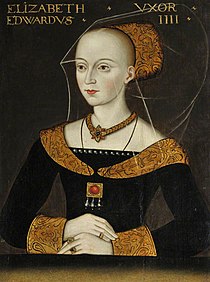
Elizabeth Woodville is the narrator of The White Queen, and she is a very intriguing character indeed. Elizabeth was originally from the House of Lancaster, with both her father and husband fighting in the War of the Roses against the Yorks, who had already placed Edward IV on the throne. Her husband died in battle, and Elizabeth was widowed with two young sons and a difficult set of in-laws. As historical legend has it, Elizabeth stood on the side of the road waiting for Edward IV to pass with his army so that she could ask him to settle a financial dispute between her family and her late husband's family. It is said that Edward was taken by her beauty immediately, and the two were soon married in secret. Yes, a Lancastrian widow and the York King of England. You heard me right. That is history, folks. You can't make up stories any better than what has actually occurred in this strange world of ours.


So, Philippa Gregory takes us from Elizabeth's time as a frustrated widow to her days as the most beautiful queen England ever saw, and then through several more battles for the throne. With the War of the Roses (commonly referred to as "The Cousin's War") as the backdrop, Elizabeth's story makes for a wonderful novel of conspiracy, scandal, revenge, and loss. The fact that the war really is a tangle of cousins, friends, and former allies means that you never really know what side anyone is on. 


There's something wonderfully authentic about Philippa Gregory's writing. You lose all sense of the novel being fiction. It often feels like you're just reading Elizabeth's diaries. I guess if you are able to build a name for yourself as one of the best historical fiction authors of your time, you know how to do research. I was impressed that just about every major aspect of the novel is based on historical evidence. Of course she fills in some gaps from time to time and has to choose between a handful of historical theories about what may have happened, but everything from Elizabeth's stunning beauty to her family's reverence of Melusina the water goddess are based on evidence. There's a pretty impressive bibliography in the back of the book that shows just how hard she worked to ensure the accuracy of her work. 


One thing I feel like I need to mention is how striking the lust for an honorable title is to these people. Elizabeth was willing to stop at nothing to make sure her son would claim the throne after Edward died. If you know your history, you know that after Edward died, his brothers tried to keep his son from the throne by claiming he was a bastard, and that Elizabeth was no more than his mistress, not his wife. It's one thing to want your family to get what is deservedly theirs, but it gets to the point where her entire family is suffering and at times facing death just for the chance that her son might get to be king. It's not even about right and wrong after a certain point -- it's just pride. It's hard to explain without laying out the entire plot of the book, but it's just such a warped sense of snobbery. I don't get it. Again, that's just the way it was, so it's not a problem with the book, it's a problem with history. It's always been confusing to me, but it is very well-displayed in this novel.


Here's a bit of a warning, though. You may or may not have noticed that the English, particularly the royal English, aren't very original when it comes to choosing names. You have to stay on your toes when you're reading this, because there are several Edwards, a few Elizabeths, some Georges, and more Richards than I care to think about. For God's sake, Elizabeth herself had two sons named Richard (one with her first husband, one with Edward).  Richard was also her first husband's name, Edward's brother's name, and Edward's brother's son's name, so that's five Richards already. Throw in the Richards you come across in the names of soldiers and distant cousins, and you've basically got yourself a headache. She does a good job clarifying which one she's talking about, but still... don't read it when you're really sleepy.


Anyway, this was a very pleasant first experience with Philippa Gregory, and I am looking forward to reading her other novels. 


4/5 Stars


Read from June 12, 2011 to June 24, 2011


--C


Tuesday, June 14, 2011

Book #20: Harry Potter and the Goblet of Fire

This is my favorite of the Harry Potter books so far. That's apparently a rather controversial statement, but I don't particularly care.

In the fourth book of J.K. Rowling's massively popular series, Harry, Ron, and Hermoine attend the Quidditch World Cup. Quidditch is the most popular sport in the wizard world, and the World Cup brings together wizards from all over the world... Turns out to be the perfect place for the evil Lord Voldemort's supporters (known as "Death Eaters") to rally together and cause some trouble. The Death Eaters' stunt sends everyone into a frenzy. Meanwhile, as the school year begins at Hogwarts, Harry learns that students from the Belgian and French schools of magic (Durmstrang and Beauxbaton, respectively) will be visitors at Hogwarts to participate in the Triwizard Tournament -- a series of tasks to determine the strongest wizard or witch. Harry is too young to participate, but that doesn't stop a hidden Death Eater from trying to bring Harry straight to Lord Voldemort, who is still seeking revenge.

The Triwizard Tournament is the main reason that I enjoyed this book so much. The selection of school "champions," the clues they are given for each task, the strategies to consider for facing each task... Beautiful. I have to say, it reminded me a little of The Hunger Games...  Of course the entire Harry Potter series was written before The Hunger Games... and the Triwizard Tournament is much less violent and cold-hearted. Still, there were some similar elements. Just enough to make me smile.

Another dimension of the Hogwarts' students lives was added in Goblet of Fire, and that is romance. Harry, Ron, and Hermoine are 14 in this book, and hormones are kicking in. All three of them are struggling with crushes, and things get complicated when Hogwarts hosts a ball to bring together the students from the competing schools. There's plenty of drama about all of that, but it wasn't overkill. (And by that, I mean, it wasn't the kind of drama you might read in, say, Twilight.) It didn't take away from the story, and I appreciate that.

You find out some interesting things about some of the recurring characters in this book, like Snape and the Malfoy family, among others. I'm really looking forward to seeing how things shape up as far as that goes. I'm  kind of sad that I'm over halfway done with the series. That's why I'm reading them about a month apart... Spreading it out as much as I can.

5/5 Stars

Read from May 29, 2011 to June 11, 2011

--C